

The Role of Artificial Intelligence in Content Translation for Global Audiences
In today’s connected digital world, businesses, publishers, educational institutions, and content creators are reaching audiences across continents. Language is no longer just a communication tool. It has become a strategic factor that determines whether a brand can successfully engage people from different cultures. As organizations expand into international markets, the demand for accurate, fast, and scalable translation has grown significantly. This is where Artificial Intelligence in Content Translation is transforming the global communication landscape.
Artificial intelligence has changed the way multilingual content is created, translated, and delivered. Traditional translation methods often required extensive human effort, making them expensive and time consuming. AI-powered translation tools now enable organizations to translate large volumes of content within minutes while maintaining impressive accuracy. Although human expertise remains essential for cultural adaptation and quality assurance, AI has become an indispensable partner in modern localization strategies.
This article explores the growing role of AI in content translation, its benefits, challenges, applications, and future potential for global audiences.
Understanding AI-Powered Content Translation
Artificial intelligence refers to computer systems designed to perform tasks that normally require human intelligence. In translation, AI combines machine learning, natural language processing, and neural networks to understand language patterns and generate accurate translations.
Unlike older translation systems that translated text word by word, modern AI solutions analyze the meaning of entire sentences. Neural machine translation studies grammar, context, sentence structure, and language usage to produce translations that sound more natural.
These systems continuously improve by learning from millions of translated documents, making every new translation smarter than the previous one. As a result, businesses can provide multilingual experiences that feel more authentic and consistent.
Why Global Businesses Need AI Translation
Companies today compete in international markets where customers expect information in their native language. Whether someone is shopping online, reading a healthcare article, exploring a travel website, or learning through an educational platform, localized content creates trust and improves engagement.
AI translation helps organizations meet these expectations without dramatically increasing operational costs.
Some major reasons businesses rely on AI include:
- Faster content delivery across multiple languages
- Reduced translation expenses
- Consistent terminology across departments
- Better customer experiences
- Improved international marketing campaigns
- Easier expansion into new markets
These advantages allow organizations to publish multilingual content much more efficiently than traditional translation workflows.
Key Technologies Behind AI Translation
Several advanced technologies work together to make AI translation possible.
Natural Language Processing
Natural Language Processing enables computers to understand grammar, sentence structure, word relationships, and context. It helps distinguish multiple meanings of the same word depending on how it is used.
Neural Machine Translation
Neural Machine Translation uses deep learning algorithms to translate complete sentences instead of individual words. This results in smoother, more accurate translations that closely resemble human writing.
Machine Learning
Machine learning enables translation systems to improve continuously. Every correction and new dataset helps the model recognize better linguistic patterns and produce higher-quality translations.
Large Language Models
Recent advances in large language models have significantly improved translation quality. These systems understand context, writing style, tone, and intent more effectively than earlier translation engines.
Benefits of Artificial Intelligence in Content Translation
Organizations across industries are discovering numerous benefits from AI-powered translation.
Faster Translation
One of the biggest advantages is speed. AI can translate thousands of pages within hours, allowing businesses to publish multilingual content almost instantly.
Cost Efficiency
Hiring professional translators for every document can become expensive, especially for companies operating in dozens of languages. AI reduces costs by automating the initial translation process while allowing human editors to focus on quality improvement.
Consistent Brand Messaging
Maintaining a consistent brand voice across different languages is challenging. AI systems can use translation memories and terminology databases to ensure consistent wording across websites, product descriptions, manuals, and marketing campaigns.
Increased Productivity
Content teams can spend more time creating valuable information instead of translating repetitive material manually. AI handles routine translation tasks while humans concentrate on creativity and cultural adaptation.
Scalability
Businesses producing large volumes of blogs, product catalogs, customer support articles, and technical documentation can easily scale their multilingual operations with AI-powered solutions.
Industries Benefiting from AI Translation
AI translation is making a significant impact across multiple industries.
E-commerce
Online retailers translate product descriptions, reviews, payment instructions, and customer support resources to reach buyers worldwide.
Healthcare
Medical organizations translate educational resources, patient instructions, healthcare guidelines, and research documents to improve accessibility across different languages.
Education
Educational institutions and online learning platforms use AI to translate courses, lectures, assignments, and learning materials for international students.
Travel and Hospitality
Hotels, airlines, tourism companies, and booking platforms use multilingual content to improve customer experiences before, during, and after travel.
Media and Entertainment
Streaming platforms, news organizations, publishers, and digital media companies translate subtitles, articles, scripts, and promotional content to attract global audiences.
Technology Companies
Software providers translate user interfaces, product documentation, knowledge bases, and technical support materials to serve international customers.
AI and Website Localization
Website localization involves more than translating text. It includes adapting content to match local languages, cultural expectations, currencies, measurements, dates, and user preferences.
AI simplifies website localization by automatically translating website pages while preserving layout and formatting. Many content management systems now integrate AI translation directly into publishing workflows, enabling businesses to update multilingual websites efficiently.
This approach reduces delays between publishing original content and making it available to international audiences.
Challenges of AI Translation
Despite its impressive capabilities, AI translation still has certain limitations.
Cultural Nuances
Languages often include idioms, humor, metaphors, and expressions that have no direct equivalent. AI may struggle to interpret these cultural elements accurately.
Context Sensitivity
Some words have multiple meanings depending on the subject. Without sufficient context, AI may occasionally choose an incorrect translation.
Specialized Industries
Legal, medical, engineering, and scientific documents require precise terminology. Human experts remain essential for reviewing highly specialized translations.
Emotional Tone
Marketing campaigns, literature, and creative writing rely heavily on emotional impact. Human translators are still better at preserving creativity and emotional expression.
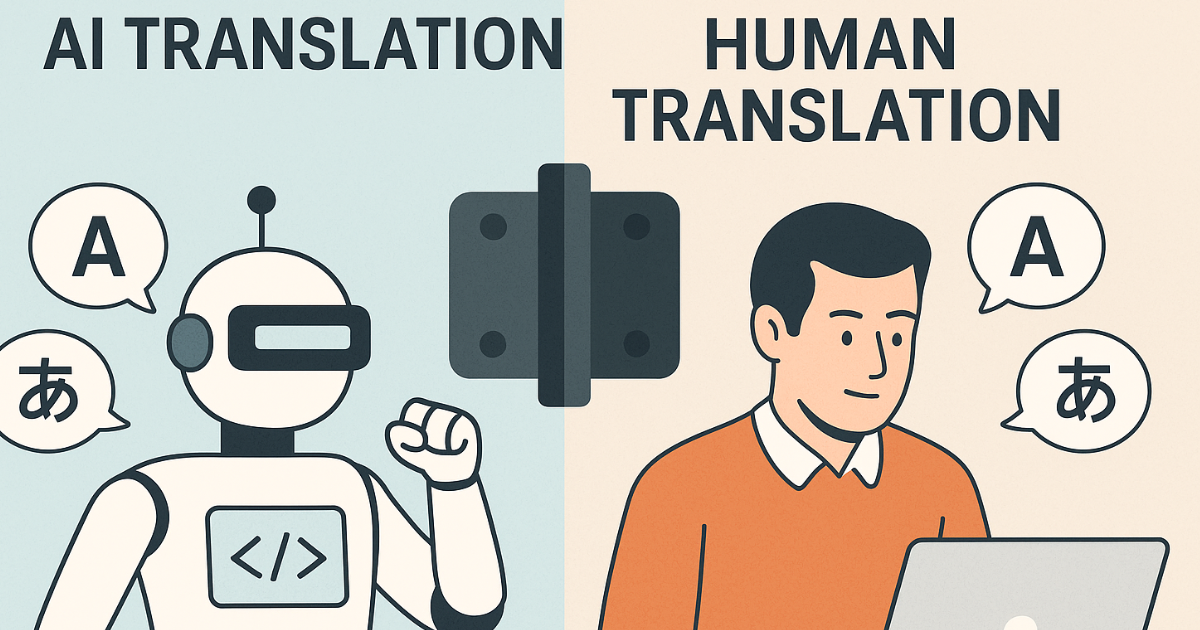
Because of these limitations, many organizations use a hybrid workflow that combines AI speed with human expertise.
Human and AI Collaboration
Rather than replacing professional translators, AI is changing their role.
Human translators now focus on reviewing AI-generated drafts, correcting errors, improving readability, and adapting content for cultural relevance. This process, known as post-editing, combines automation with professional expertise.
The collaboration between AI and human linguists delivers higher quality translations while reducing project timelines.
Professional translators also help train AI systems by providing accurate corrections that improve future translations.
SEO and Multilingual Content
Search engine optimization plays a crucial role in multilingual marketing. Simply translating content is not enough. Businesses must also optimize translated pages for local search behavior.
AI assists SEO by translating keywords, meta descriptions, headings, image alt text, and structured content while maintaining search relevance.
However, keyword research should still be performed separately for each language because users often search differently across regions.
Combining AI translation with localized SEO strategies helps businesses improve visibility in international search results.
AI Translation for Customer Support
Customer support has become increasingly global. Businesses receive inquiries from customers speaking multiple languages every day.
AI-powered translation enables support teams to communicate with customers in real time through live chat, email, and messaging platforms.
This improves response times while helping companies provide a consistent customer experience regardless of language barriers.
Many organizations also use AI to translate knowledge bases, FAQs, and troubleshooting guides, allowing customers to find answers independently.
Ethical Considerations
As AI translation becomes more common, organizations must address several ethical concerns.
Data privacy remains an important issue, especially when translating confidential documents. Businesses should ensure that translation platforms comply with security regulations.
Bias in AI models is another concern. Translation systems learn from existing datasets, which may contain cultural or linguistic biases. Continuous monitoring and model improvement help reduce these issues.
Transparency is equally important. Organizations should clearly define when AI-generated translations are being used, particularly in sensitive industries such as healthcare and law.
Future of AI Translation
The future of AI translation looks increasingly promising.
Emerging AI systems are becoming better at understanding cultural context, regional dialects, humor, and conversational language. Real-time speech translation is also improving rapidly, enabling seamless multilingual communication during meetings, conferences, and customer interactions.
Voice assistants, augmented reality, and wearable technology are expected to integrate advanced translation capabilities, making language barriers less significant than ever before.
Generative AI will also play a larger role in content localization by adapting writing style, tone, and messaging for different cultural audiences instead of simply translating words.
As AI continues to evolve, businesses will gain even more efficient tools for communicating with customers worldwide.
Best Practices for Using AI Translation
Organizations should follow several best practices to maximize translation quality.
First, use AI for initial translations while involving professional editors for important content.
Second, maintain a centralized terminology database to ensure consistency across all materials.
Third, regularly review translated content for cultural relevance and readability.
Fourth, perform language-specific SEO research before publishing multilingual webpages.
Finally, continuously monitor user feedback and update translations whenever improvements are needed.
Following these practices helps businesses achieve both efficiency and quality.
Conclusion
Artificial intelligence has transformed content translation from a slow and expensive process into a fast, scalable, and intelligent solution for global communication. Businesses can now reach international audiences more efficiently, publish multilingual content at scale, and improve customer experiences across languages.
While AI continues to become more accurate through advances in machine learning and natural language processing, human expertise remains essential for cultural adaptation, creativity, and quality assurance. The most successful organizations combine AI automation with professional linguistic review to achieve the best results.
As technology evolves, Artificial Intelligence in Content Translation will continue reshaping how businesses communicate across borders. Companies that embrace these innovations while maintaining high translation standards will be better positioned to expand internationally, strengthen customer relationships, and compete in an increasingly connected global marketplace.
For organizations seeking sustainable international growth, investing in Artificial Intelligence in Content Translation is no longer just a technological upgrade. It is a strategic decision that enables meaningful communication, stronger global engagement, and long-term business success.