
MUSTANG VALLEY: What I Learned When the Mountains Asked Me to Slow Down
Some places do not reveal themselves easily. They ask for patience, curiosity, and a willingness to slow down. Mustang Valley is one such place. Known as “Mustang,” a Tibetan word that translates to “Plain of Aspiration,” this extraordinary region lies north of the Annapurna range in Nepal, close to the vast Tibetan Plateau of China. Divided into Upper Mustang and Lower Mustang, the valley was once an independent kingdom, shaped by centuries of isolation and self-preservation.
Despite its remote location, Mustang draws thousands of travelers every year-and after experiencing it myself, I understand the quiet pull it holds. The valley feels untouched by time, guided more by faith, wind, and history than by modern influence. Life here unfolds along the banks of the Kali Gandaki River, which sustains settlements scattered across an otherwise stark and arid landscape.
In this article, I share my experience of Mustang Valley-its history, healing rituals, climate, local cuisine, ways to reach the region, and the remarkable places that make this forbidden kingdom unlike anywhere else in Nepal.
HEALING RITUALS AND SPIRITUAL LIFE
What struck me most in Mustang was its deeply spiritual atmosphere, one that feels inseparable from the land itself. A minority of the population practices Tibetan Buddhism, and as I moved through the valley, I encountered ancient monasteries, chortens, prayer walls, and fluttering prayer flags woven naturally into everyday life. Among them, Lo Gekar Monastery stands out as one of the oldest and most revered spiritual sites in the region. Standing there, I felt a quiet sense of continuity, as if centuries of devotion were still present within its walls.
Beyond formal Buddhist traditions, Mustang is equally shaped by ancient shamanistic beliefs. The local shamans, known as bönpo, are deeply respected and play a vital role in community life. People turn to them for healing, protection, and spiritual guidance. Their rituals -rooted in chanting, symbolic movements, and a strong connection to nature-are meant to restore balance between the body, spirit, and environment. Witnessing these ceremonies offered me a rare insight into a belief system where spirituality and healing are inseparable, and where the mountains, wind, and land are considered active forces in human well-being.
Mustang Valley is renowned for its distinctive culture, rich history,and striking geography.
Healing Rituals and Spiritual Life :
What struck me most in Mustang was its deeply spiritual atmosphere. A minority of the population practices Tibetan Buddhism, and the landscape is dotted with monasteries, chortens, and prayer walls. Among them, Lo Gekar Monastery stands out as one of the oldest and most revered.
Beyond formal Buddhism, Mustang is also shaped by shamanistic traditions. Local shamans, known as bönpo, play a vital role in community life. Their healing rituals, ceremonies, and spiritual practices are still widely respected and practiced today. Witnessing these rituals offered me rare insight into belief system where health, spirituality, and nature are inseparable.
Climate and Geography:
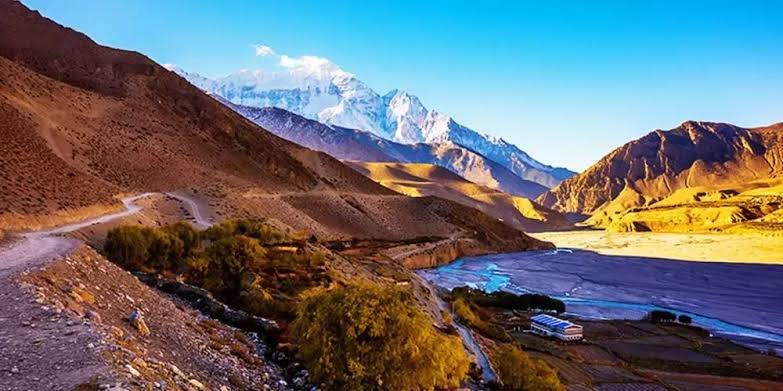
Mustang lies in the rain shadow of the Annapurna range, giving it a cool, semi-arid, trans-Himalayan climate. The average daytime annual temperature is around 10.9°C, and the region receives only about 307 mm of rainfall per year.
The dry air, dramatic erosion patterns, and vast desert-like plains create landscapes unlike anywhere else in Nepal. It feels closer to Tibet than to the lush hills commonly associated with the Himalayas.
How I Reached Mustang Valley
I by air, the Along I reached Mustang by air, watching the landscape shift from green valleys to stark, open mountains. Along the way, I met people who had arrived by road and trekking routes, each carrying stories of long journeys and quiet moments. Their experiences showed me that every path to Mustang offers a different way of understanding the land.
Reaching Mustang by Flight:
The journey to Mustang usually begins with a flight from Kathmandu to Pokhara. The short flight offers beautiful views of hills and distant mountains and brings a calm shift from the busy capital. From Pokhara, travelers can take another flight to Jomsom, the main entry point to Mustang. This option is quick and convenient, and the views from the air-deep valleys, rivers, and snow-covered peaks-make the experience memorable even before the journey on land begins.
Reaching Mustang by Road:
Traveling by road is a slower but more grounded way to reach Mustang. From Pokhara, buses, taxis, or rented bikes head toward Jomsom, following the Prithvi Highway and mountain roads along the Kali Gandaki River. The journey usually takes around 6 to 8 hours. Along the way, the scenery changes steadily from green hills and waterfalls to rocky cliffs and wide riverbeds offering a clear sense of how the landscape transforms as one moves closer to Mustang.
Reaching Mustang by Trek:
For many travelers, trekking is the most meaningful way to reach Mustang. The walking trails pass through quiet villages, old monasteries, and open valleys, allowing time to observe local life and culture. As the days go by, the surroundings slowly change, and the air becomes thinner and drier. Trekking into Mustang feels less like traveling to a destination and more like growing into the land itself, step by step.
TASTING MUSTANG: FAMOUS FOODS AND LOCAL FLAVORS
Thakali Food: The Thakali people, native to the Thak Khola region, are known across Nepal for their cuisine. A traditional Thakali meal includes dal, bhat, tarkari (lentils, rice, vegetables), pickles, and meat for non- vegetarians-simple, nourishing, and perfectly suited for high altitudes.
Newari Cuisine: I also came across Newari dishes such as choila, momo, bara, sekuwa, kachila, yomari, and aloo bodi tama. Each dish reflects Nepal’s cultural diversity and rich culinary heritage.
Local Wines: One unforgettable experience was tasting Marpha brandy, a locally produced fruit brandy made from apples, apricots, and pears. Crafted by the Thakali community, it carries a strong character with around 42% alcohol by volume.
Tibetan Bread: Known as Balep korkun or Yosang balep, this flat, round Tibetan bread is made from barley flour (tsampa) and is a staple across the region.
Khapse: Prepared especially during Tibetan Losar (New Year), khapse are deep-fried biscuits shaped creatively-some resembling donkey ears-and often coated with powdered sugar.
FOOD IN MUSTANG IS DEEPLY INFLUENCED BY GEOGRAPHY, CLIMATE, AND ETHNICITY. EXPLORING LOCAL CUISINE BECAME ONE OF MY FAVORITE PARTS OF THE JOURNEY
FAMOUS PLACES I EXPLORED IN MUSTANG
Wandering through Mustang felt like tracing the soul of the Himalayas, where every river, trail, and monastery carried a story older than time. From sacred waters to wind-swept shrines, each place I explored deepened my connection to the land’s spiritual and cultural rhythm.
Kali Gandaki River
Originating from the Nhubine Himal Glacier near the Tibetan border at 6,268 meters, the Kali Gandaki is the deepest river in Nepal. It flows through the world’s deepest gorge and is considered sacred.
Jomsom-Muktinath Trek
This trek offers spectacular views of the Annapurna and Dhaulagiri ranges, while passing through Tibetan-influenced villages and the Kali Gandaki Gorge-an unforgettable blend of nature and culture.
Upper Mustang
The heart of the Forbidden Kingdom, Upper Mustang offers arid landscapes, ancient traditions, and the fortified capital Lo Manthang, famous for its preserved Tibetan architecture and monasteries.
Ghar Gompa
Also called Ghar Monastery, this sacred Buddhist site sits on a hilltop at around 3,800 meters and holds deep spiritual significance in Upper Mustang.
Marpha Monastery
Also known as Tashi Lha Khang Gompa, this 200-year-old monastery belongs to the Karma Pa sect and is dedicated to Amitabha, Avalokiteshvara, Vajrapani, and Guru Padmasambhava.
EXTRA TIPS FOR TRAVELERS TO MUSTANG VALLEY
Traveling to Mustang is not like visiting other regions of Nepal; it requires preparation, awareness, and respect for local customs. First, permits are essential- Upper Mustang lies in a restricted area, and travelers must secure special permits through registered agencies. It is advisable to plan this well in advance, especially during peak seasons.
Acclimatization is critical. Mustang sits at a high altitude, and rushing the journey can lead to altitude sickness. I found it best to move slowly, stay hydrated, and allow the body time to adjust. Simple habits- drinking warm fluids, avoiding alcohol initially, and resting adequately-make a significant difference.
Weather can be unpredictable. While Mustang is dry compared to other Himalayan regions, strong winds are common, particularly in the afternoons. Carry layered clothing, windproof jackets, and proper trekking shoes even if you are traveling by road or bike.
Cultural sensitivity is equally important. Many villages follow strict Tibetan Buddhist traditions. Asking permission before photographing people, dressing modestly near monasteries, and respecting religious rituals helps build genuine connections with locals.
Lastly, connectivity is limited. Mobile networks and internet access are unreliable in Upper Mustang. Rather than seeing this as an inconvenience, I treated it as a gift- an opportunity to disconnect from screens and fully immerse myself in the rhythm of the land.
The Road That Stayed With Me.
Leaving Mustang Valley, I felt as though I was stepping away from a place that exists outside ordinary time. This journey taught me that Mustang is not defined by dramatic moments, but by quiet understanding found in wind-carved landscapes, ancient monasteries, and the unhurried lives of its people.
At nearly 3,840 meters above sea level, life here moves slowly, with purpose and balance. I saw how spirituality flows naturally into daily routines, how history is preserved not in books, but in lived traditions. Walking through villages and sacred sites made me aware of how deeply connected people are to their land and beliefs.
From the sacred fires of Muktinath to the silent paths leading toward Lo Manthang, Mustang offered me clarity and humility. I+ reminded me that some places are 17/21 meant to impress, but to transfor Mustang Valley stayed with me long after I left-quiet, powerful, and unforgettable.