

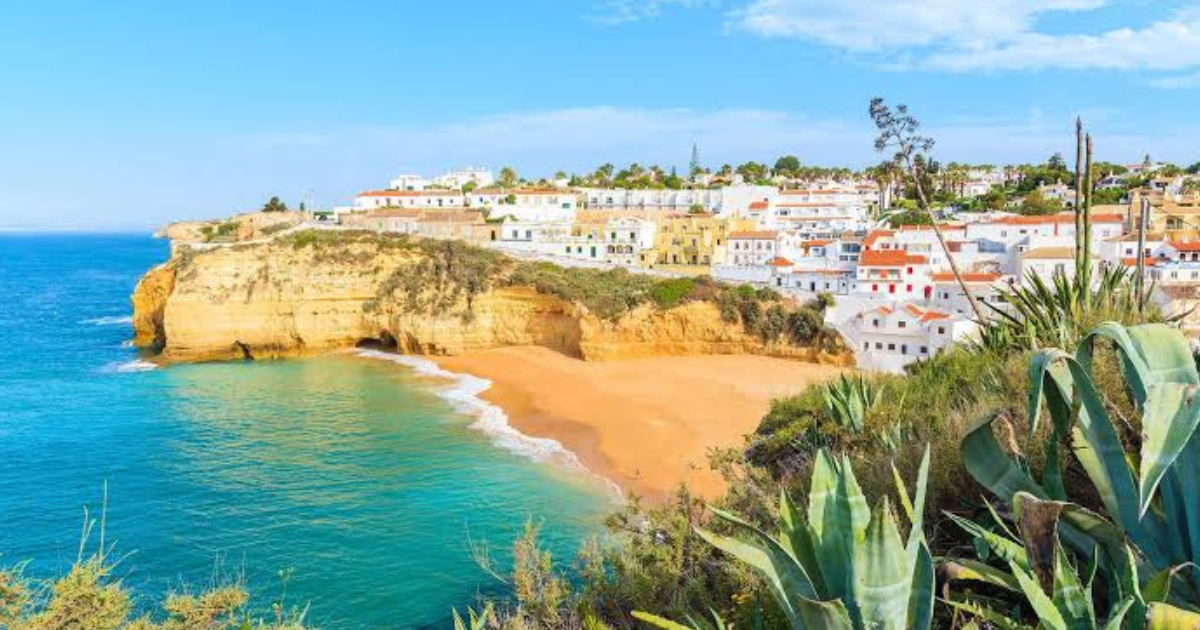
Portugal: Europe’s Atlantic Jewel of Heritage and Flavor
Portugal is one of Europe’s oldest nation-states, a country where maritime ambition, layered history, and distinct regional identities converge within a relatively compact territory. Despite its modest size, Portugal has exercised global influence disproportionate to its geography. From the Atlantic voyages that reshaped world trade routes to its modern role within the European Union, the country presents a compelling case study in continuity, adaptation, and cultural resilience. Today, Portugal balances a preserved architectural and historical legacy with a contemporary identity rooted in innovation, tourism, renewable energy, and international diplomacy.
Atlantic Gateway of Southwestern Europe
is located in southwestern Europe on the Iberian Peninsula. It shares its only land border with to the east and north, while the west and south are bordered by the Atlantic Ocean. This Atlantic orientation has profoundly shaped Portugal’s economic, political, and cultural development.
The country’s mainland territory stretches roughly 560 kilometers north to south and 220 kilometers east to west. Its capital, , sits along the Tagus River estuary near the Atlantic coast, strategically positioned for maritime trade. Other major cities include in the north and in the southern Algarve region.
Geographically, Portugal can be divided into three primary zones:
- Northern Region – Characterized by mountainous terrain, river valleys, and dense vegetation. The Douro Valley, known for terraced vineyards, is one of the most striking landscapes in Europe.
- Central Region – A mix of rolling plains and coastal cliffs. This region includes important agricultural areas and historic towns.
- Southern Region (Alentejo and Algarve) – Dominated by plains, cork oak forests, and Mediterranean-style coastal cliffs. The Algarve is particularly known for its dramatic limestone formations and beaches.
Portugal also includes two autonomous archipelagos in the Atlantic Ocean: and . These islands are volcanic in origin and add considerable ecological and geographic diversity to the country.
The extensive coastline, stretching over 1,700 kilometers including the islands, has historically facilitated exploration, fishing, and trade. It remains central to Portugal’s tourism industry and cultural identity.
Four Distinct Seasons with Atlantic Influence
Portugal’s climate varies regionally but is broadly classified as Mediterranean with strong Atlantic influence. The diversity between north and south is significant.
Spring (March–May)
Spring is generally mild and transitional. Temperatures range from 15°C to 22°C depending on region. Rainfall decreases gradually from winter levels, particularly in the south. Northern Portugal may still experience occasional showers. The countryside becomes notably green, particularly in the Alentejo plains and Douro Valley.
Summer (June–August)
Summers are hot and dry, especially inland and in the south. Temperatures frequently exceed 30°C in the Alentejo and Algarve. Coastal areas benefit from Atlantic breezes, keeping temperatures more moderate. Northern coastal regions such as Porto are cooler than Lisbon and the south. Rainfall is minimal during this period.
Autumn (September–November)
Autumn begins warm and gradually cools. September often feels like an extension of summer, particularly in southern Portugal. Rainfall increases steadily from October onward. Agricultural activities, especially grape harvests in the Douro Valley, define this season culturally and economically.
Winter (December–February)
Winters are mild compared to most of Europe. Coastal southern regions may average 10–16°C. Northern inland areas can be colder and wetter. Snowfall is rare except in mountainous zones such as the Serra da Estrela range. Rainfall is highest during winter months, especially in the north.
Overall, Portugal’s climate supports agriculture, tourism, and outdoor lifestyles year-round, making it one of Europe’s most temperate environments.
From Ancient Kingdom to Global Maritime Power
Portugal’s history spans prehistoric settlements, Roman occupation, medieval consolidation, maritime expansion, imperial decline, dictatorship, and modern democratic integration.
The region was first inhabited by Celtic and Iberian tribes before incorporation into the Roman Empire as Lusitania. Roman influence remains visible in architecture, language roots, and infrastructure.
Following the collapse of Roman authority, Germanic tribes and later Moorish forces from North Africa occupied much of the Iberian Peninsula. Christian kingdoms in the north gradually reconquered territory in a process known as the Reconquista.
Portugal officially emerged as an independent kingdom in the 12th century. Under King Afonso I, independence from León was consolidated. Over the following centuries, Portugal expanded southward, eventually establishing stable borders that remain largely unchanged today.
The 15th and 16th centuries marked the Age of Discovery, during which Portuguese explorers established maritime routes to Africa, Asia, and South America. This era elevated Portugal into a global trading power.
However, the empire declined due to competition, natural disasters such as the 1755 Lisbon earthquake, and colonial conflicts. In the 20th century, Portugal experienced authoritarian rule under António de Oliveira Salazar before transitioning to democracy in 1974.
Today, Portugal is a democratic republic and a member of the European Union, NATO, and other international institutions.
10 Key Moments That Shaped the Nation
- 1143 – Treaty of Zamora
Portugal’s independence from the Kingdom of León was recognized. - 1385 – Battle of Aljubarrota
Secured Portuguese independence against Castile and strengthened national identity. - 1415 – Conquest of Ceuta
Marked the beginning of overseas expansion. - 1498 – Vasco da Gama Reaches India
established a sea route to India, revolutionizing global trade. - 1500 – Discovery of Brazil
Pedro Álvares Cabral claimed Brazil for Portugal. - 1580–1640 – Iberian Union
Portugal came under Spanish rule before regaining independence. - 1755 – Lisbon Earthquake
One of Europe’s most devastating earthquakes reshaped urban planning and political philosophy. - 1910 – Establishment of the Republic
The monarchy was abolished. - 1974 – Carnation Revolution
Peaceful military coup ended decades of dictatorship. - 1986 – Entry into the European Community
Portugal joined what is now the European Union, accelerating modernization.
Culinary Traditions Rooted in Sea and Soil
- Bacalhau
Salted cod is considered Portugal’s national dish, with hundreds of preparation methods. - Pastéis de Nata
Custard tarts with caramelized tops, famously associated with . - Caldo Verde
A traditional soup made from potatoes, kale, and chorizo. - Francesinha
A hearty sandwich from Porto layered with meats and covered in a rich sauce. - Sardinhas Assadas
Grilled sardines commonly served during summer festivals.
Portuguese cuisine emphasizes seafood, olive oil, fresh herbs, and regional wines such as Port and Vinho Verde.
5 Distinctive Traits of Portugal
- One of Europe’s Oldest Borders
Portugal’s continental borders have remained largely unchanged since the 13th century. - World’s Oldest Bookstore
in Lisbon holds the Guinness World Record as the world’s oldest operating bookstore. - Global Language Reach
Portuguese is spoken by over 250 million people worldwide, including in Brazil, Angola, and Mozambique. - Renewable Energy Leadership
Portugal has made significant investments in wind and solar energy, occasionally running on near 100% renewable electricity for short periods. - Fado Music Tradition
Fado, a melancholic music genre expressing longing and nostalgia, originated in Lisbon and is recognized by UNESCO as intangible cultural heritage.
Conclusion
Portugal represents a synthesis of maritime legacy, resilient governance, regional diversity, and cultural depth. Its Atlantic geography shaped centuries of exploration and exchange, while its climate and landscape support both agriculture and tourism. Historically marked by independence struggles, imperial ambition, natural disaster, and political transformation, Portugal today stands as a stable democratic nation integrated into Europe while maintaining a distinct Lusophone identity. Compact yet historically expansive, Portugal remains a nation whose global influence far exceeds its geographic footprint.