

Nestlé: Building a Global Food Empire from a Single Innovation
Introduction
What does it take to feed the world? How does one company reach billions of consumers every single day? And how did a small experiment grow into the world’s largest food and beverage enterprise?
Nestlé operates in more than 180 countries, serving billions of people across diverse markets and cultures. Its portfolio spans nearly every major food category: infant nutrition, dairy products, coffee, confectionery, bottled water, and pet care. Few companies command such breadth across the global food ecosystem.
But Nestlé positions itself as more than a packaged food manufacturer. Its stated purpose—“Enhancing quality of life and contributing to a healthier future”—signals a strategic focus on nutrition, health, and wellness. This framing reflects its ambition to influence not just what people eat, but how they live.
Over more than 150 years, Nestlé has evolved from a modest Swiss laboratory experiment into a multinational powerhouse. Through scale, brand expansion, and continuous product innovation, it has helped shape modern food consumption patterns worldwide. Today, its influence extends beyond products to public health debates, sustainability efforts, and the future of global nutrition.
Brand History
Nestlé traces its origins to 1867 in Vevey, Switzerland. The company was founded by Henri Nestlé, a German-born pharmacist who developed an infant cereal formula made from cow’s milk, wheat flour, and sugar. Created to combat high infant mortality rates, the product gained rapid international recognition. Its success established the commercial and scientific foundation for what would evolve into one of the world’s largest food and beverage corporations.
In 1905, Nestlé merged with the Anglo-Swiss Condensed Milk Company, expanding its dairy production capacity and strengthening its European market position. During both World Wars, the company adapted to raw material shortages and volatile demand conditions, refining its supply chain and reinforcing its global presence.
A transformative milestone occurred in 1938 with the launch of Nescafé, an innovation that industrialized instant coffee production and redefined consumer convenience worldwide. Nescafé rapidly became a flagship brand with enduring global equity.
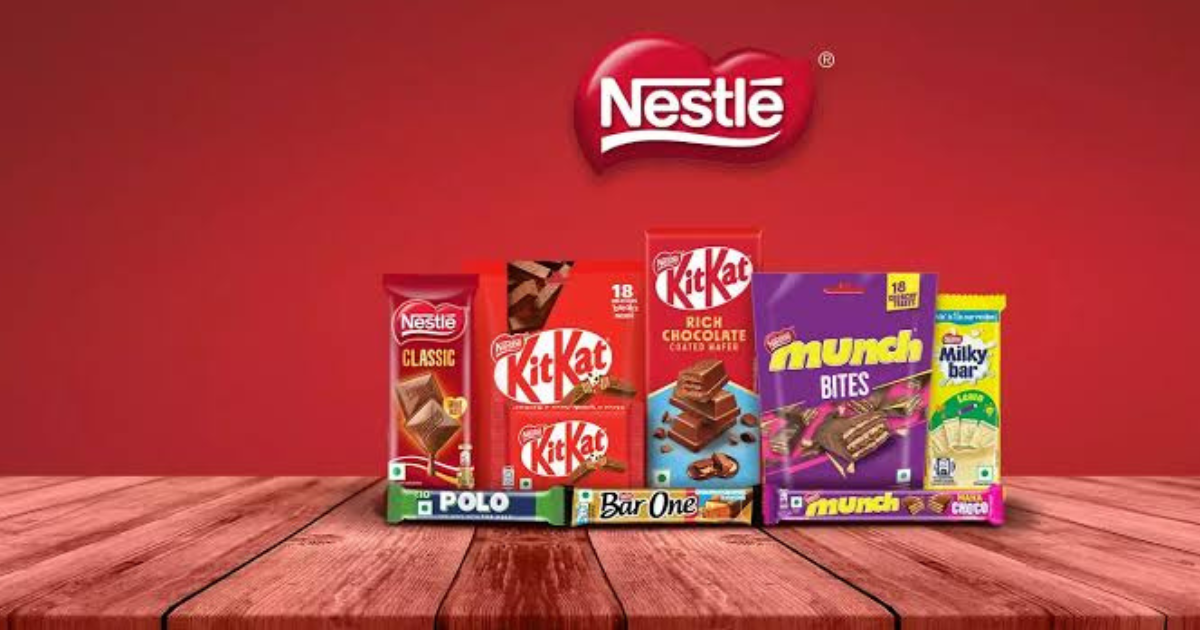
Following World War II, Nestlé accelerated growth through strategic acquisitions, diversifying beyond dairy into confectionery, beverages, frozen foods, bottled water, and pet care. Iconic brands such as KitKat, Maggi, Nespresso, and Purina became core pillars of its portfolio.
In the 21st century, Nestlé repositioned itself as a nutrition, health, and wellness leader, investing in health science, plant-based products, and sustainability. Headquartered in Vevey, it remains a publicly traded multinational enterprise with global operations..
The Story of the Nestlé Logo
TThe Nestlé logo stands as one of the most enduring and symbolically rich brand identities in corporate history. The name “Nestlé” originates from founder Henri Nestlé and is derived from his family crest, which prominently featured a bird’s nest. In German, “Nestle” translates to “little nest,” a meaning that aligned seamlessly with the company’s original mission of providing infant nutrition and life-sustaining food products.
The earliest version of the logo portrayed a mother bird feeding her chicks in a nest. This visual metaphor communicated core brand values: nourishment, maternal care, safety, and protection. It reinforced the company’s commitment to supporting early childhood development at a time when infant mortality rates were high in Europe.
As branding standards evolved, the logo underwent refinement to meet modern design principles. The contemporary mark retains the nest and birds but features streamlined lines and balanced typography for clarity across digital, print, and global platforms.
Despite stylistic simplification, the symbolism remains intact. The nest continues to represent family, sustenance, and trust, preserving a direct visual link to the company’s founding purpose while supporting its global corporate identity.
Market Strategy
Nestlé’s market strategy revolves around scale, brand diversification, and localized adaptation. While the company operates globally, it tailors products to local tastes, cultural preferences, and price sensitivities. At the same time, it leverages centralized research and development to maintain quality and innovation leadership.
Key elements of Nestlé’s market strategy:
- Portfolio Diversification
Nestlé minimizes risk by operating across multiple categories—coffee, dairy, confectionery, pet care, health science, and bottled water—ensuring that downturns in one segment do not destabilize the company. - Localization with Global Standards
Products like Maggi noodles are adapted to regional flavors in Asia, Africa, and Latin America, while maintaining consistent safety and quality benchmarks. - Premiumization and Innovation
Through brands like Nespresso, Nestlé successfully entered the premium coffee segment, creating high-margin ecosystems built around capsules and machines. - Sustainability and Responsible Sourcing
Nestlé invests heavily in sustainable cocoa, coffee, and dairy sourcing, recognizing that long-term profitability depends on environmental and social stability within its supply chain.
Challenges
Despite its scale and success, Nestlé has faced significant challenges. The company has encountered criticism over issues such as bottled water sourcing, infant formula marketing practices in developing nations, environmental sustainability concerns, and plastic waste. Additionally, shifting consumer preferences toward organic, plant-based, and minimally processed foods have forced Nestlé to accelerate reformulation and portfolio transformation. Regulatory scrutiny, activist pressure, and increasing competition from agile local brands continue to test the company’s adaptability. Managing reputation while sustaining growth remains one of Nestlé’s central strategic challenges.
7 Interesting Facts About Nestlé
Here are some interesting facts about Nestlé:
- Global Manufacturing Footprint: Nestlé operates more than 340 factories worldwide, giving it one of the most extensive production networks in the food and beverage industry. This scale enables localized production and distribution across diverse markets.
- Massive Brand Portfolio: The company owns over 2,000 brands globally, spanning categories such as coffee, dairy, confectionery, bottled water, nutrition, and pet care. Its portfolio ranges from global power brands to region-specific products.
- Nescafé’s Daily Reach: Nescafé is consumed in billions of cups daily worldwide, making it one of the most widely recognized and consumed coffee brands in history.
- R&D Leadership: Nestlé operates one of the largest private food research organizations in the world, investing heavily in research and development to advance nutrition science, food safety, and product innovation.
- Expansion into Pet Care: In 2001, Nestlé significantly strengthened its presence in the pet care sector through the acquisition of Purina, positioning itself as a global leader in pet nutrition.
- Creating Shared Value (CSV): Nestlé was among the earliest multinational corporations to formalize the “Creating Shared Value” framework, integrating business performance with social and environmental impact.
- Industry Leadership: With annual revenues exceeding $90 billion, Nestlé is the largest food and beverage company globally by revenue, underscoring its dominant position in the industry.
Conclusion:
Nestlé’s journey from a life-saving infant formula to a global food conglomerate reflects strategic adaptation, brand discipline, and relentless expansion. While its scale brings scrutiny, it also demonstrates how a single innovation—rooted in nutrition—can evolve into a multinational enterprise shaping global consumption patterns for more than a century.