

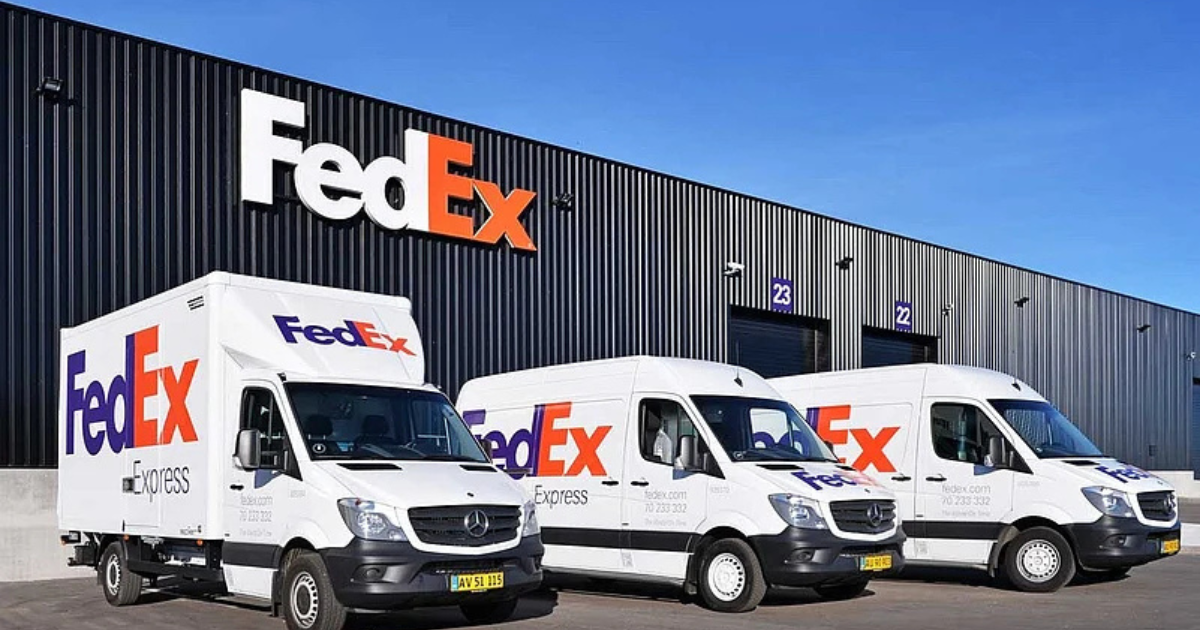
Connecting People and Possibilities Since 1971: The FedEx Corporation Story
What if a package could travel across the country overnight with guaranteed precision? What if distance no longer slowed business, opportunity, or connection? In 1971, a bold idea set out to answer those questions and permanently reshape global commerce. emerged with a simple but powerful vision: build a logistics network fast enough, reliable enough, and intelligent enough to connect people and possibilities without delay. From pioneering overnight delivery to becoming one of the most recognized names in transportation, FedEx has transformed the movement of goods into a science driven by innovation, discipline, and customer trust.
In this article, we briefly explore its journey, challenges, and rise as a leader in express delivery.
Origins of an Industry Disruptor
FedEx was founded in 1971 in by . Smith had developed the concept for an integrated overnight delivery network while still a student. His thesis was simple yet revolutionary: centralize operations through a single air hub to enable next day delivery across major markets.
Operations formally launched in 1973 after the company relocated to . The selection of Memphis was strategic. Its central geographic position and relatively uncongested airport allowed FedEx to build a hub-and-spoke distribution system. Every package would pass through a central sorting facility before reaching its destination, ensuring speed and precision.
This operational model became the backbone of modern express logistics.
By 1983, FedEx had crossed the $1 billion revenue mark, becoming the first U.S. startup to reach that milestone within a decade without mergers or acquisitions. The company expanded internationally and strengthened its global footprint through acquisitions, including the purchase of in 1988. In 1994, Federal Express officially rebranded as FedEx, reinforcing a sharper, more marketable global identity.
Surviving Financial Turbulence
FedEx’s early years were marked by intense financial strain. Smith invested $4 million of his inheritance and raised approximately $91 million from investors to fund aircraft, infrastructure, and operating costs.
At one critical juncture, the company was close to insolvency. In a now famous episode, Smith took the company’s remaining $5,000 to Las Vegas and won $27,000 playing blackjack. While the winnings were not enough to solve long term capital issues, they temporarily covered fuel expenses and bought the company crucial time to secure additional financing.
Beyond capital constraints, FedEx faced market resistance. Customers were accustomed to slower and cheaper ground shipping methods. Convincing businesses to pay a premium for overnight delivery required not just marketing but proof of reliability. High fixed costs, aircraft procurement, fuel, and labor intensified operational risk.
FedEx responded through disciplined service quality, technological investment, and process optimization. Over time, reliability became its defining competitive advantage.
Scaling in a Competitive Landscape
The express logistics industry is intensely competitive. FedEx operates alongside major global players, including:
1. United Parcel Service (UPS):
UPS is FedEx’s strongest and most direct competitor. It provides parcel delivery, freight forwarding, supply chain management, and contract logistics services worldwide. UPS has a vast ground fleet, strong brand loyalty, and a highly integrated global network.
2. DHL Express:
DHL Express, a division of Deutsche Post DHL Group, is a global leader in international shipping and cross-border logistics. It operates in more than 220 countries and territories, with particular strength in Europe and emerging markets.
3. United States Postal Service (USPS):
USPS competes primarily on domestic parcel delivery within the United States. It is known for its affordability and universal service obligation, which allows it to deliver to every U.S. address.
4. Amazon Logistics:
Amazon Logistics has rapidly grown as an in-house delivery network supporting Amazon’s e-commerce ecosystem. It competes with FedEx in last-mile delivery, air cargo, and same-day fulfillment services.
5. XPO Logistics:
XPO specializes in freight transportation, particularly less-than-truckload (LTL) services. While not identical to FedEx’s express model, it competes in freight and supply chain logistics segments.
To remain competitive, FedEx has invested heavily in automation, digitization, and advanced warehouse systems. Data analytics, route optimization algorithms, and supply chain visibility tools have strengthened operational efficiency and customer experience.
Strategic Growth and Brand Building
FedEx’s growth strategy integrates operational independence with brand unity. Its structure allows operating companies to specialize while benefiting from shared infrastructure and global brand equity. The organization emphasizes long term financial returns, disciplined capital allocation, and strong cash flow management.
Marketing has also played a significant role in its expansion. FedEx has utilized:
- Television advertising and event sponsorships
- Search engine optimization to enhance digital discoverability
- Social media engagement through informative and targeted campaigns
- A robust e-commerce interface for shipment management
- A mobile application offering tracking, rate calculation, and delivery scheduling
The brand’s visual identity, including the hidden arrow in the FedEx logo symbolizing speed and precision, reinforces its core value proposition.
Innovation and Operational Resilience
Over the decades, FedEx has navigated economic recessions, fuel price volatility, natural disasters, and shifting global trade patterns. Its response strategy typically includes cost rationalization, service diversification, and infrastructure upgrades.
Environmental sustainability has also become a strategic priority. Investments in fuel efficient aircraft, alternative energy vehicles, and carbon reduction initiatives reflect a long term commitment to responsible growth.
Financial Strength and Market Position
As of fiscal year 2023, FedEx reported revenue of approximately $95.5 billion, reflecting strong global demand for transportation, logistics, and e-commerce solutions. Its portfolio spans express shipping, ground delivery, freight services, supply chain management, and specialized same day solutions.
Today, FedEx is synonymous with express delivery. What began as a high risk entrepreneurial vision has evolved into a cornerstone of global commerce.
Frequently Asked Questions:
Q1. What does FedEx do?
FedEx provides transportation, e-commerce, freight, and integrated business logistics services worldwide.
Q2. What is FedEx’s mission?
FedEx aims to deliver superior financial returns by providing high value logistics, transportation, and related business services through focused operating companies.
Q3. Who are its primary competitors?
Major competitors include UPS, DHL Express, USPS, and global logistics firms operating in freight and supply chain management.
Q4. What was FedEx’s recent revenue?
FedEx reported approximately $95.5 billion in revenue for fiscal year 2023.
Q5. What are its core services?
Core offerings include express parcel shipping, ground transportation, freight logistics, supply chain solutions, and digital shipment management tools.